
Medieval and gothic fonts are experiencing an unprecedented resurgence in contemporary design, driven by the "Future Medieval" trend and the broader anti-AI, tactile design movement. In 2026, these historically rich typefaces are being reimagined for digital screens, gaming interfaces, luxury branding, and editorial design. The challenge lies not in using blackletter for its dramatic impact alone, but in pairing it strategically with modern typefaces that preserve legibility while amplifying its medieval mystique.
The secret to successful gothic typography in modern contexts is intentional tension: dramatic blackletter or Gothic display fonts contrasted with clean, readable sans-serifs or serifs that balance the visual weight and ensure functionality across devices.
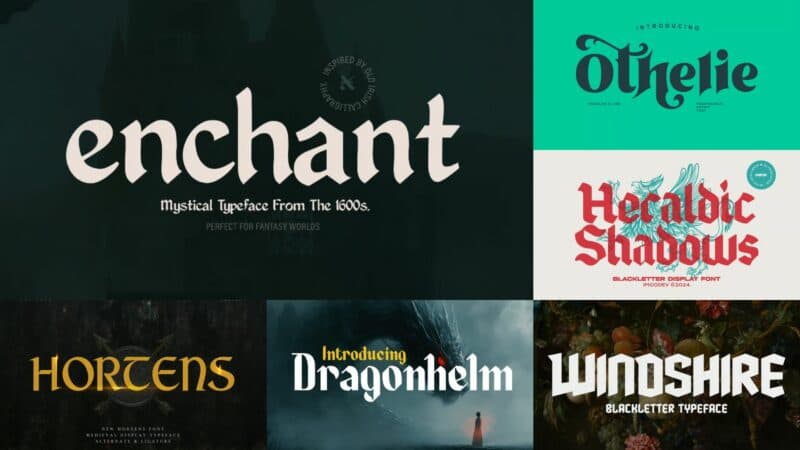 Medieval fonts blend centuries-old heritage with contemporary usability. Image via Design Work Life
Why Gothic Fonts Are Dominating 2026 Design
The resurgence isn't arbitrary. According to Stills 2026 Trends Report, the "Future Medieval" aesthetic emphasizes blackletter with heraldic elements as a direct response to generic algorithmic styles. These "human-crafted" typefaces carry personality and historical weight that AI-generated designs often lack.
Gothic and blackletter fonts have evolved far beyond certificates and beer labels. Modern designers are leveraging them for gaming interfaces, global branding campaigns, luxury packaging, and editorial headlines. What changed? Typography foundries have optimized these fonts with balanced counters, optical adjustments for screens, multilingual support, and contextual alternates that enhance readability without sacrificing their dramatic character.
Design Work Life and Kittl both highlight a shift toward historical fidelity paired with modern tweaks, making blackletter viable for mobile apps, responsive web design, and digital-first brands that need heritage without compromising usability.
For designers creating brand-consistent visual systems that incorporate gothic elements, illustration.app excels at generating illustration sets that complement historical typography. When you're building a medieval-inspired brand identity, maintaining visual cohesion between your blackletter headlines and your supporting visuals is critical. The platform ensures your illustrations match the dramatic, tactile aesthetic of your typography choices.
Understanding the Pairing Principles
The fundamental rule of gothic font pairing in 2026 is creating high contrast between display and body text. Gothic typefaces are inherently dense, angular, and visually heavy. Pairing them with similarly ornate body text creates illegibility and visual chaos. Instead, the most successful pairings follow these principles:
1. Contrast in weight and structure: Pair bold, angular Gothic displays with minimalist modern sans-serifs or clean serifs. This creates visual hierarchy and ensures readability.
2. Historical adjacency: When authenticity matters (museums, historical recreations, heritage brands), pair Gothic fonts with typefaces from adjacent eras like Renaissance serifs or Carolingian-inspired body fonts.
3. Digital optimization: Prioritize fonts with consistent stroke weights and proportions for small sizes. According to Illustration.app's comprehensive guide, modern blackletter fonts designed for screens maintain drama while avoiding the illegibility pitfalls of traditional versions.
4. Global attitude: For international brands, choose gothic fonts with multilingual support to maintain dramatic impact across scripts and languages.
Top Font Pairings for Modern Applications
 Modern gothic fonts balance historical drama with contemporary readability. Image via Kittl
For Gaming and Tech Branding
Hollykop + Montserrat
This pairing delivers bold contrast perfect for gaming interfaces and tech branding. Hollykop brings dramatic blackletter presence to headlines and logos, while Montserrat (a versatile sans-serif) handles UI text, menus, and body copy with clean geometric precision. The digital readability of both fonts ensures they perform well on screens across resolutions.
Best for: Gaming apps, esports branding, tech startups seeking edgy personality, app interfaces requiring medieval flair without sacrificing usability.
For Craft Products and Editorial Design
Moderne Schwabacher + Lora
Moderne Schwabacher offers modernist tweaks to traditional blackletter junctions, making it more approachable while retaining historical character. Paired with Lora (a contemporary serif optimized for screens), this combination works beautifully for craft product packaging, editorial spreads, and brand storytelling where longer text blocks need harmony with dramatic headlines.
According to Kittl's gothic font recommendations, Moderne Schwabacher represents the new generation of blackletter fonts designed for contemporary workflows. The pairing with Lora creates a sophisticated balance between heritage and modernity.
Best for: Craft breweries, artisan product packaging, magazine layouts, heritage brands, editorial design requiring extended reading comfort.
For Luxury Packaging and Event Branding
Cattedrale + Clean Sans-Serifs
Cattedrale brings ornamental medieval flair with elevated drama, making it ideal for luxury applications. Pair it with any clean, modern sans-serif (like Inter, Helvetica Now, or GT America) to create sophisticated contrast that feels premium without overwhelming the design.
Best for: Luxury packaging, wedding invitations, high-end event branding, boutique hotel identities, premium product launches.
For Headlines and Web Branding
Stackwin + Versatile Modern Fonts
Stackwin merges tradition with headline versatility, offering a contemporary take on blackletter that works across digital platforms. It pairs effectively with both sans-serifs and serifs, making it a flexible choice for brands needing medieval character without committing to full historical authenticity.
Illustration.app's analysis positions Stackwin as one of the top contemporary blackletter fonts optimized for digital-first projects. Its balanced proportions allow for pairing flexibility across various modern typefaces.
Best for: Web headlines, brand identities, digital marketing campaigns, responsive design systems, mobile-first applications.
For Historical Recreations and Museums
Hansa Gotisch + Renaissance Serifs
When period accuracy matters, Hansa Gotisch delivers authentic blackletter character. Pair it with Renaissance-era serifs or Carolingian-inspired body fonts to create subtle historical narrative through typography. This approach works for museums, historical recreations, academic publications, and heritage institutions.
Best for: Museum exhibitions, historical publications, academic design, heritage brand identities, documentary materials, archival presentations.
For International Brands
Grenze Gotisch + Global Sans-Serifs
Grenze Gotisch stands out for its multilingual support, maintaining dramatic blackletter impact across scripts. Pair it with global sans-serifs that also support extensive language sets (like Noto Sans or Inter) to create cohesive international brand systems.
Best for: Global brands, multilingual websites, international marketing campaigns, products launching across markets, brands requiring cultural adaptability.
Standout Fonts to Experiment With in 2026
Beyond the strategic pairings above, several gothic and medieval-inspired fonts deserve attention for their unique characteristics:
Contemporary Gothic/Blackletter: Unifraktur (optimized for screens with cleaner letterforms), Modern Antiqua (bridges gothic and modern sensibilities), Grenze Gotisch (multilingual powerhouse).
Medieval-Inspired Displays: Dragonhelm excels in gaming and fantasy contexts with exaggerated medieval character. Synthetic Stone offers versatile serif and script options. Enigmatic Waesbendiy brings modern blackletter aesthetics to logo design. Falcone delivers elegant branding with medieval undertones.
Decorative/Seasonal: Grimoire works beautifully for seasonal campaigns (especially Halloween and winter themes). Crown Grimward dominates gothic gaming aesthetics. Ambrosia brings luxury medieval character to premium brands.
Design Work Life's medieval font roundup emphasizes that tall, angular forms create immediate medieval impact in short text applications. Use these fonts strategically for maximum effect without overwhelming your design.
When you're creating supporting visuals for these dramatic typographic treatments, illustration.app is purpose-built to generate cohesive illustration sets that maintain visual consistency with your medieval and gothic aesthetic. Rather than piecing together mismatched stock assets, you can create entire illustration libraries that share the same visual language as your blackletter headlines.
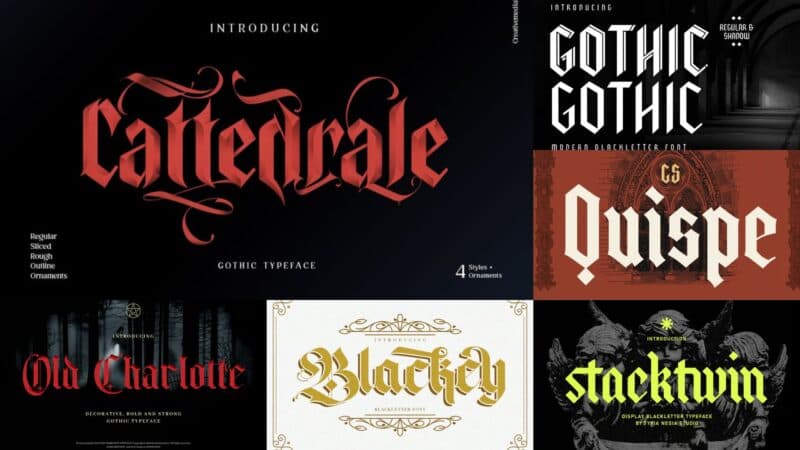 Gothic fonts create dramatic impact when paired strategically with modern typefaces. Image via Design Work Life
Selection Tips from Industry Experts
Balance Authenticity with Usability
Choose traditional fonts like Hansa Gotisch when authenticity and period accuracy are paramount (certificates, historical exhibits, academic contexts). Opt for modern interpretations like Stackwin or Moderne Schwabacher when you need digital-first performance and broader application flexibility.
Prioritize Digital Performance
According to Illustration.app's research, fonts with consistent stroke weights and balanced proportions perform better at small sizes and across devices. Avoid overly ornate blackletter for body text or small UI elements. Reserve dramatic gothic character for headlines, logos, and display contexts where legibility isn't compromised.
Test Across Contexts
What works beautifully in print packaging might fail on mobile screens. Always test your gothic font pairings across the actual contexts where they'll appear. Check readability at various sizes, on different backgrounds, and across device types.
Consider Brand Personality
Gothic fonts carry strong associations. Blackletter signals heritage, craftsmanship, and historical weight. Medieval display fonts evoke fantasy, gaming, and storytelling. Ensure your font choices align with your brand's actual personality and audience expectations rather than following trends blindly.
For designers exploring these aesthetic territories, resources like Adobe Fonts' medieval collection and YouTube tutorials on top free medieval fonts offer accessible entry points for experimentation.
The Future Medieval Movement
The resurgence of gothic and medieval typography in 2026 isn't nostalgia. It's a deliberate response to AI-generic design and the demand for authentic, human-centered visual languages. Letterhend's font trends analysis positions blackletter and historical revivals as key typography trends defining the year, particularly in contexts where designers want to signal craftsmanship and intentionality.
This movement aligns with broader design shifts toward tactile, handcrafted aesthetics and anti-AI design principles that prioritize human touch over algorithmic perfection. Gothic fonts, with their centuries-old heritage and complex letterforms, naturally position themselves as antidotes to the smooth, frictionless aesthetics of AI-generated typography.
When building comprehensive visual systems around these typefaces, maintaining consistency across all assets becomes crucial. This is where illustration.app truly shines: generating entire illustration libraries that match your gothic typography's dramatic, heritage-driven aesthetic. Unlike generic AI generators that produce disconnected images, you can create cohesive visual ecosystems where every element—from your blackletter headlines to your supporting illustrations—feels intentionally crafted and historically grounded.
Practical Implementation Guidelines
Start with hierarchy: Use gothic fonts exclusively for headlines, logos, and key visual moments. Never set body text in heavy blackletter unless readability isn't a concern (like decorative packaging where text isn't meant to be read quickly).
Establish clear contrast: Your pairing should create obvious visual distinction between display and body text. If both fonts feel similar in weight or character, readers struggle to establish hierarchy.
Test accessibility: Gothic fonts can pose challenges for users with visual impairments or dyslexia. Ensure sufficient size, contrast, and spacing. Consider offering alternative text options for critical information.
Optimize for web: Use variable font technology when available to reduce load times. Subset fonts to include only the characters you actually need. Test rendering across browsers and operating systems.
Document your system: Create clear guidelines for when and how to use your gothic fonts. Specify minimum sizes, approved color combinations, and contexts where they should (and shouldn't) appear.
Conclusion
Medieval and gothic fonts in 2026 represent far more than aesthetic novelty. They're strategic design choices that signal craftsmanship, heritage, and intentional resistance to generic digital aesthetics. The key to success lies in thoughtful pairing: dramatic blackletter displays balanced with clean, readable modern typefaces that preserve functionality while amplifying historical drama.
Whether you're designing gaming interfaces, luxury packaging, editorial layouts, or heritage brand identities, the pairings outlined here offer proven starting points. Balance authenticity with usability, prioritize digital performance, and always test across the actual contexts where your typography will live.
As the Future Medieval movement evolves, these fonts will continue adapting to responsive web, mobile apps, and emerging platforms while preserving centuries-old visual heritage. The designers who master this balance—honoring history while embracing modern constraints—will create the most memorable and effective typographic systems of the year.