
Gothic and blackletter fonts have experienced a remarkable resurgence. Once relegated to certificates, metal band logos, and the occasional beer label, these dramatic typefaces are now powering gaming interfaces, global brand identities, and contemporary headlines with a fresh, modern edge.
The difference in 2026? Enhanced digital legibility, multilingual support, and structural tweaks that preserve historical drama while functioning seamlessly on screens, in apps, and across diverse scripts. These aren't your grandmother's Old English fonts—they're optimized for the realities of contemporary design work.
Why Gothic Fonts Are Having a Moment
The anti-AI, tactile design movement has designers reaching for typefaces with personality and historical weight. Gothic and blackletter fonts deliver exactly that: centuries of visual heritage packed into letterforms that feel undeniably human and crafted. They provide instant atmosphere—whether it's medieval mystique, urban edge, or luxury gravitas—without feeling generic or algorithm-generated.
According to Kittl's comprehensive 2026 font list, designers are prioritizing fonts that balance historical accuracy with modern interpretation. The key is choosing typefaces that respect blackletter tradition while incorporating contemporary features like optical adjustments for screens, contextual alternates, and support for global branding projects.
Top Gothic and Blackletter Fonts for 2026
These fonts stand out for blending tradition with 2026 design trends like screen readability, contextual alternates, and cross-script harmony. Here are the heavy hitters worth adding to your toolkit:
Hollykop
Designed specifically for digital environments, Hollykop features innovative apertures that give breathing room to dense blackletter structures. This makes it ideal for gaming interfaces, edgy tech brands, and mixed-layout designs where blackletter needs to coexist with modern sans-serifs. Design Work Life highlights its exceptional pairing with Montserrat, creating a bridge between medieval drama and contemporary clarity.
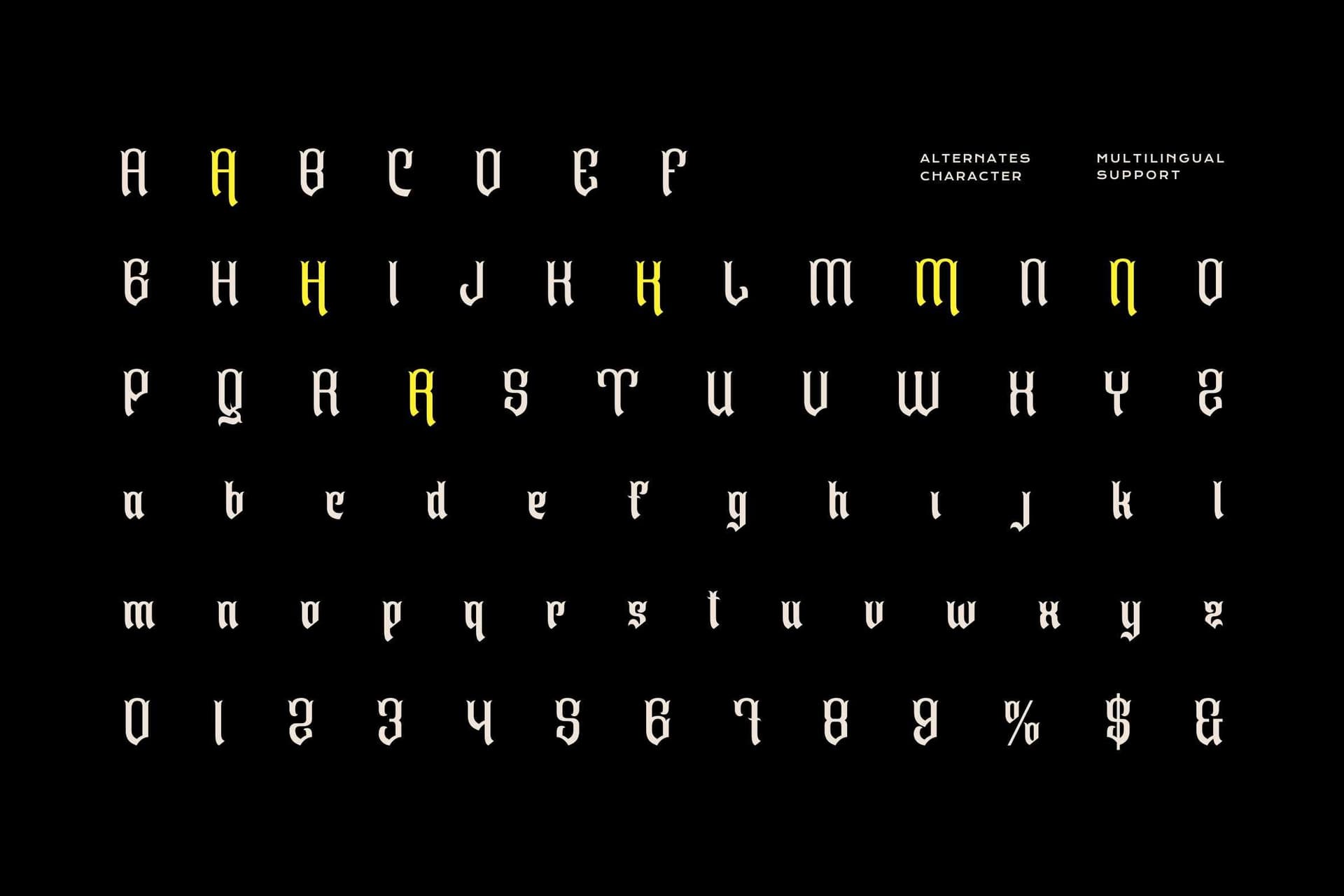 Hollykop showcases optimized apertures for digital legibility. Source: MasterBundles
Grenze Gotisch
The multilingual blackletter superstar for global brands. Grenze Gotisch maintains its dramatic aesthetic across non-Latin scripts without looking awkward or forced—a rare achievement in blackletter design. Perfect for international tourism campaigns, global events, and brands that need Gothic drama with worldwide reach.
Headstock
For designers working in music, gaming, or streetwear branding, Headstock delivers metal-inspired intensity with asymmetric tension and mathematical progression. Its dynamic readability makes it work for both display headlines and shorter text blocks, giving you more flexibility than traditional blackletter.
Unifraktur and Unifraktur Coof
Think of these as the Swiss Army knife for standardized blackletter. According to Kittl's font analysis, Unifraktur offers authentic Fraktur digitized for modern use—perfect for certificates, heritage brands, and historical references that need to remain readable on phones. Unifraktur Coof specifically optimizes counters and proportions for smaller screens.
Cattedrale
When you need decorative symbols and modern medieval flair for dramatic logos and display work, Cattedrale delivers. Its ornamental qualities make it a go-to for luxury packaging, event branding, and anywhere Gothic drama needs to feel elevated rather than aggressive.
Stackwin
A bold display blackletter that successfully merges Gothic tradition with contemporary headline needs. Design Work Life recommends Stackwin for designers who want versatility—it works across branding, editorial design, and web headlines without feeling locked into one aesthetic niche.
Killuminati
Bold serif with a dark edge, Killuminati excels in intense, attention-grabbing designs like horror movie posters, metal band merch, and themed experiences. Its aggressive personality makes it ideal for projects that need to feel confrontational or visceral.
Moderne Schwabacher
A German blackletter with modernist junctions that makes it surprisingly readable for longer text. Kittl suggests pairing it with Lora serif for craft products, artisan brands, and editorial layouts that need historical authenticity without complete illegibility.
Ethernas and Angel Shine
These fonts bring architectural elegance with consistent stress and illumination logic—think premium packaging, luxury events, and high-end brand identities. Their refinement sets them apart from grungier Gothic options, positioning them for sophisticated applications.
Grimoire
A trendy release from June 2025, Grimoire features spooky decorative details perfect for Halloween campaigns, themed restaurants, and seasonal branding. Its modern take on blackletter makes it feel current rather than dated.
Adobe's Top Picks for 2026
Adobe Fonts highlights Amador, Eskapade, and Blonde Fraktur as their premier blackletter offerings for 2026. These fonts excel at versatile, dramatic Old English styles that work across print and digital applications, backed by Adobe's quality standards and licensing clarity.
Key Design Trends Shaping Gothic Typography in 2026
Digital Readability Is Non-Negotiable
Gone are the days when blackletter meant instant illegibility at small sizes. Fonts like Hollykop and Unifraktur Coof feature balanced counters, optical adjustments, and calibrated proportions specifically designed for screens. This makes them viable for gaming interfaces, app branding, and mobile-first designs—contexts where traditional blackletter would fail completely.
Multilingual and Global Applications
Kittl's research shows that fonts like Grenze Gotisch and QT Faktur now support non-Latin scripts with impressive harmony. Some even handle Arabic script integration (like Blaka) without losing Gothic character. This expansion makes blackletter viable for international brands, global tourism, and events that need drama across multiple languages.
Modern Twists on Historical Forms
Experimental elements are breathing new life into blackletter. Think grunge textures in Dark Angels, 8-bit interpretations in Gothic Byte, or quirky funk in Gothic Rapsody. These fonts mix heritage with urban, fantasy, or nostalgic vibes, giving designers more creative flexibility than strict historical accuracy would allow.
If you're creating branded illustration sets that incorporate Gothic typography, illustration.app excels at generating cohesive visual systems where blackletter headlines work seamlessly with supporting graphics. The platform's focus on brand consistency ensures your Gothic typography pairs naturally with illustration styles rather than clashing.
Historical Fidelity with Practical Flexibility
For designers working on museum projects, historical recreations, or heritage brands, fonts like Hansa Gotisch offer period-accurate details that satisfy purists. Meanwhile, Modern Antiqua applies clean strokes and digital-friendly adjustments for contexts where authenticity matters but usability can't be sacrificed.
How to Choose the Right Gothic Font for Your Project
Balance Historical Accuracy vs. Modern Interpretation
Traditional options like Hansa Gotisch and Unifraktur work best for certificates, historical references, and brands that need authentic medieval or Germanic character. Contemporary interpretations like Stackwin and Headstock serve modern branding, gaming, and digital-first applications where personality trumps period accuracy.
Prioritize Legibility Features
Look for fonts with small caps, contextual alternates, and consistent degradation if you're using blackletter for body text or mixed layouts. Belzebuth offers small caps that improve readability, while Metalwings provides alternates that let you adjust density and drama as needed.
Consider Strategic Pairing
Gothic fonts work best when paired with contrasting typefaces. Design Work Life suggests combinations like:
- Montserrat with Hollykop for gaming and tech branding
- Lora with Moderne Schwabacher for craft products and editorial design
- Clean sans-serifs with Cattedrale for luxury packaging
The contrast between blackletter drama and modern simplicity creates tension that feels intentional rather than chaotic.
Test for Screen Performance
Before committing to a Gothic font for digital projects, test it at various sizes on actual devices. Fonts optimized for screens (like Unifraktur Coof) maintain structure and readability on phones, while purely decorative options may fall apart. This matters enormously for app interfaces, responsive web design, and mobile branding.
Practical Applications for Gothic Fonts in 2026
Gaming and Esports Branding
Gothic fonts bring instant atmosphere and intensity to gaming brands. Their medieval associations work naturally for fantasy RPGs, while their aggressive edge suits competitive shooters and esports teams. Hollykop and Headstock specifically optimize for the legibility challenges of gaming interfaces.
Global Brand Identities
With multilingual support becoming standard, Gothic fonts can now power international campaigns without losing drama across scripts. Grenze Gotisch makes Gothic branding viable for tourism boards, global events, and multinational product launches.
Headlines and Editorial Design
Bold display blackletter like Stackwin transforms contemporary headlines and magazine layouts, bringing visual weight and personality that generic sans-serifs can't match. The key is pairing them with clean body text and generous whitespace.
Luxury and Premium Packaging
Fonts like Ethernas and Cattedrale bring architectural elegance to premium products. Their refined Gothic qualities work for spirits packaging, luxury cosmetics, and high-end culinary brands that want sophistication with a historical edge.
Themed Experiences and Seasonal Campaigns
Grimoire and similar decorative blackletter fonts excel in Halloween campaigns, themed restaurants, horror experiences, and seasonal branding. Their spooky details feel modern and self-aware rather than dated.
When designing branded materials that incorporate Gothic typography alongside illustrations, illustration.app is purpose-built for creating cohesive visual systems where dramatic typefaces and supporting graphics feel unified. This consistency matters when Gothic fonts provide the headline drama while illustrations handle storytelling and explanation.
Free Gothic and Blackletter Resources
For designers working with limited budgets, FontSpace offers free options like Cloister Black and various Gothic-inspired fonts. While these won't match the digital optimization and multilingual support of premium options, they work well for personal projects, experimentation, and concept exploration.
Behance showcases custom modern Gothic blackletter projects from designers worldwide, providing inspiration for how contemporary creatives are pushing blackletter boundaries. It's worth browsing for experimental approaches and unconventional applications.
The Future of Gothic Typography
As we move through 2026, Gothic and blackletter fonts continue evolving beyond their historical constraints. The emphasis on digital legibility, multilingual support, and modern structural tweaks means these dramatic typefaces can function in contexts their medieval predecessors never imagined—mobile apps, global brands, responsive web design.
The anti-AI design movement's hunger for tactile, human aesthetics positions Gothic fonts perfectly. Their centuries of visual heritage and undeniable personality make them feel crafted and intentional—the opposite of algorithmic blandness. For designers seeking visual identity with genuine character and historical depth, Gothic and blackletter fonts deliver atmosphere-driven design without sacrificing contemporary functionality.
Whether you're building a gaming interface with Hollykop, launching a global brand with Grenze Gotisch, or creating seasonal campaigns with Grimoire, 2026's Gothic fonts offer the perfect balance: dramatic historical aesthetics meet modern design realities.