
Your brand's visuals look technically perfect. Colors are balanced, compositions follow the golden ratio, everything aligns to pixel-perfect grids. But something feels off. It's clean, polished, professional... and utterly forgettable. Welcome to the over-polished AI uniformity trap.
As AI tools become embedded in design workflows, an insidious problem emerges. Brands aren't just generating bad visuals—they're creating technically flawless content that lacks soul, personality, and differentiation. When you optimize heavily for AI comprehension and algorithmic consistency, you risk becoming indistinguishable from every competitor doing the same thing.
This guide will show you how to audit your brand for over-polished AI uniformity, detect the warning signs, and inject the authentic personality that makes brands memorable.
Understanding Over-Polished AI Uniformity
Over-polished AI uniformity differs from typical brand inconsistency problems. Your visuals might be perfectly consistent across touchpoints, but that consistency creates a different issue: algorithmic sameness.
 Systematic brand auditing reveals patterns humans might miss. Source: Clappia
According to Waikay's AI audit framework, brands face a paradox. While "semantic consistency" ensures AI maintains narratives faithful to your positioning, excessive optimization creates messaging that's technically accurate but completely flat. Core facts remain constant, but brand personality, nuance, and authentic voice get smoothed into corporate-speak.
The risk? Brands sound indistinguishable because they're all optimizing for the same AI comprehension factors. It's the reverse of AI hallucinations. Instead of invented errors, you get sanitized uniformity where nothing stands out.
Warning Signs of Over-Polish
Before diving into audit frameworks, recognize these red flags:
Visual tells:
- Every image has the same level of finish and polish
- Compositions feel algorithmically balanced rather than intuitively arranged
- Color palettes lean heavily on safe, complementary schemes without tension
- Typography follows strict hierarchies with no playful deviations
- Textures, if present, are uniformly applied rather than organic
- Nothing feels hand-touched or human-made
Content patterns:
- Brand descriptions use industry-standard terminology instead of distinctive language
- Messaging sounds professional but personality-free
- Competitor descriptions in AI outputs sound nearly identical to yours
- Sentiment analysis shows neutral-positive rather than emotionally resonant responses
- Your brand story includes all the right facts but no memorable details
If you're nodding along to several of these, it's time for a systematic audit.
The Four-Stage Audit Framework
Stage 1: Comparative Narrative Analysis
Start by examining how AI perceives your brand versus competitors. This reveals whether you've achieved differentiation or algorithmic anonymity.
The test: Query multiple AI models (ChatGPT, Claude, Perplexity) with prompts like:
- "Describe [your brand] and compare it to [competitor 1], [competitor 2]"
- "What makes [your brand] different from others in [your category]?"
- "Explain [your brand]'s personality and tone"
What to look for:
- Linguistic uniqueness: Does the AI use distinctive descriptors for your brand, or generic industry terms?
- Personality expression: Do descriptions convey character and voice, or just features and benefits?
- Differentiation clarity: Can the AI articulate what makes you different without defaulting to vague claims like "customer-focused" or "innovative"?
According to FullCast's AI perception audit recommendations, examine which sources AI cites when describing your brand. Are citations pulling from authentic, differentiated content or sanitized official materials? This reveals whether your genuine market position comes through or gets filtered into a polished narrative.
Stage 2: Visual Personality Assessment
Move beyond brand guidelines to evaluate whether your actual output maintains visual personality.
Create a visual inventory:
- Collect 20-30 recent brand assets (social posts, ads, website graphics, presentations)
- Lay them out in a grid without labels
- Ask: Could these belong to any professional brand in our category?
Personality stress tests:
- Remove all logos and text. Are visuals still distinctly "yours"?
- Show assets to people unfamiliar with your brand. What three adjectives do they use to describe them?
- Compare your visuals to three competitors. Where's the visual tension or unexpected choices that signal personality?
For brands using AI illustration tools, this assessment becomes crucial. illustration.app is specifically designed to solve this problem. Unlike generic AI generators that produce visually perfect but personality-free images, illustration.app creates cohesive illustration packs that maintain consistent visual personality across your brand. You're not just getting technically correct visuals; you're building a distinctive illustration language.
When conducting your visual audit, pay special attention to:
- Imperfection markers: Do your visuals have intentional irregularities, hand-drawn elements, or organic textures?
- Color personality: Are you using unexpected color combinations, or defaulting to algorithmically "safe" palettes?
- Compositional choices: Do layouts feel intuitively arranged or mathematically optimized?
If every asset scores high on "professional polish" but low on "memorable personality," you're deep in uniformity territory.
Stage 3: Sentiment Authenticity Check
Tunheim's audit framework emphasizes assessing "Brand Messaging & Tone Alignment" to ensure AI reflects your authentic identity rather than a homogenized version. But go deeper than positive/negative/neutral sentiment.
Emotional resonance testing:
- Beyond overall sentiment, examine what emotions your brand descriptions evoke
- Determine whether AI conveys brand personality or merely corporate attributes
- Check if nuanced positioning (including appropriate negative context) gets represented
For instance, a challenger brand should show some edge or tension in descriptions. A heritage brand should convey warmth and depth, not just "established" and "trusted." If sentiment analysis shows consistently neutral-positive without emotional peaks, your messaging has been over-sanitized.
The authenticity paradox: As brands implement AI audit recommendations (semantic optimization, content adjustments, thematic authority), there's growing risk of creating "algorithmic authenticity." This is carefully crafted messaging that satisfies AI comprehension but sacrifices genuine brand character.
Watch for this by testing whether:
- AI descriptions include memorable stories, not just optimized facts
- Your brand's origin story retains human details versus bullet-pointed milestones
- Founder quotes or team perspectives appear versus generic corporate statements
Stage 4: Query-Based Persona Testing
Following Joseph Studios' funnel-based approach, test across different search intents to see where personality survives and where it gets flattened.
Branded queries: "Tell me about [your brand]"
- Does AI emphasize what makes you genuinely different?
- Do descriptions sound like your actual voice?
- Is personality evident or hidden behind facts?
Comparison queries: "[Your brand] vs [competitor]"
- Can AI articulate authentic competitive advantages without generic language?
- Do differentiation points reflect real positioning or algorithmic assumptions?
- Is your unique value proposition clear and memorable?
Problem/solution queries: "Best [tool/service] for [specific use case]"
- Does your positioning sound unique to your actual solution?
- Are recommendations based on distinctive strengths or generic category fit?
- Does AI understand nuanced positioning or default to obvious answers?
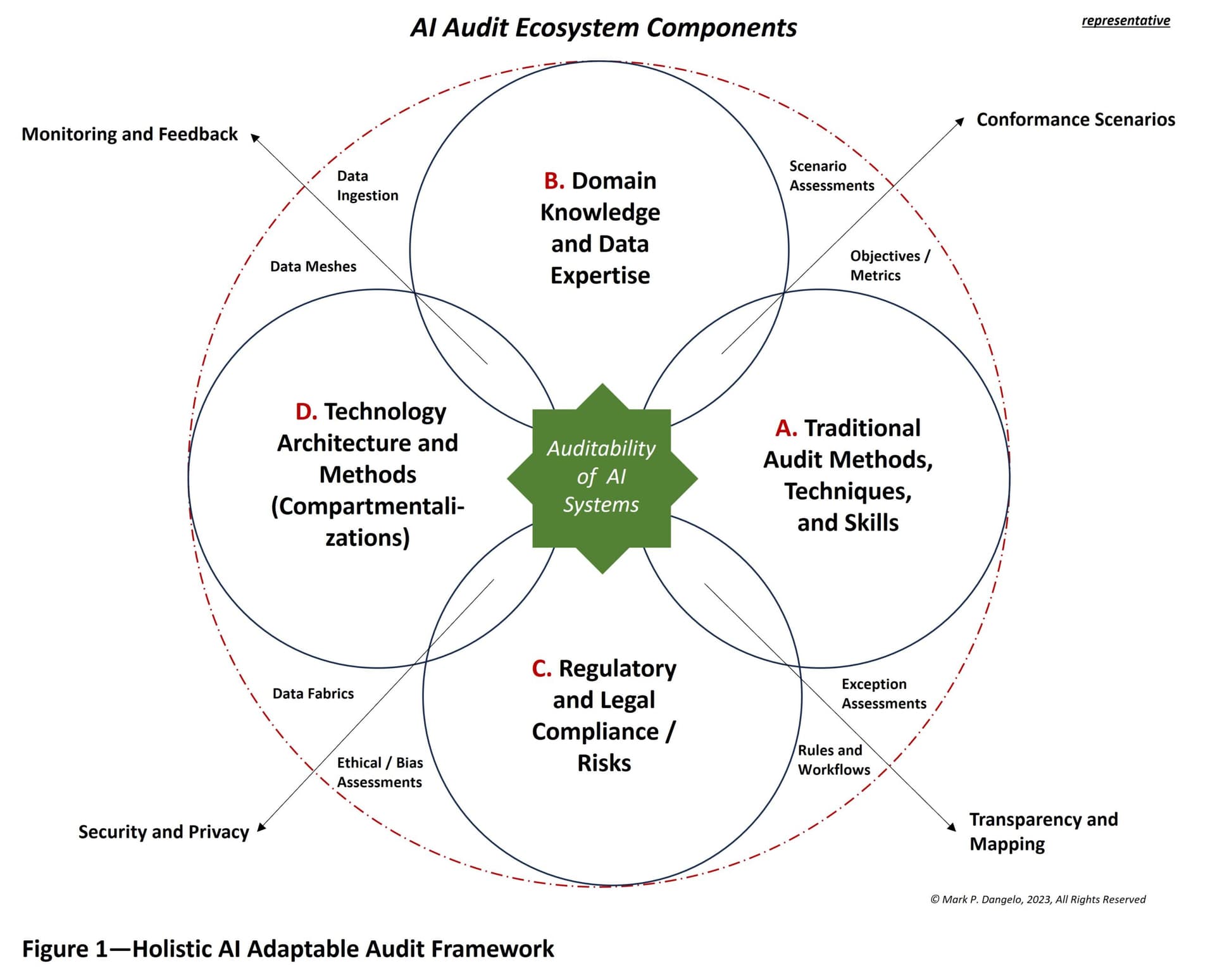 Effective AI auditing requires examining both what systems show and what they hide. Source: Thomson Reuters
According to Joseph Studios research, brands must demonstrate "topic authority" within their sector. Over-polished brands risk creating generic, universally safe content that fails to establish thought leadership. If AI can't distinguish your expertise from competitors', you've lost differentiation in the algorithmic layer.
Fixing Over-Polish: Practical Strategies
Once you've identified uniformity issues, here's how to inject personality back into your brand.
1. Build Intentional Imperfection
Perfect consistency isn't the goal. Human brands have texture, variation, and organic development.
Tactical approaches:
- Introduce hand-drawn elements or sketched components periodically
- Vary finish levels—not everything needs maximum polish
- Allow for compositional asymmetry and unexpected arrangements
- Include texture overlays or grain to break digital flatness
- Embrace slight color variations across assets rather than rigid palette adherence
For more on creating authentic, imperfect design systems, see our guide on how to design imperfect by design visual systems.
2. Source Diversity Matters
Ensure AI citations pull from diverse, authentic content sources, not just official messaging. This means:
- Publishing thought leadership content that shows personality
- Sharing founder perspectives and team voices
- Creating case studies with specific, memorable details
- Including customer stories that highlight unique aspects
- Developing content that takes positions, not just describes features
Waikay's cognitive visibility metric measures frequency and relevance of brand mentions. But over-polishing creates a paradox: high visibility may occur with reduced differentiation. AI accurately describes your company but in ways identical to 20 competitors. The narrative becomes interchangeable rather than memorable.
Combat this by ensuring your most distinctive content gets indexed and cited.
3. Dual-Track Assessment
Standard AI visibility metrics focus on accuracy and reach. Add subjective brand personality evaluation alongside objective accuracy metrics.
Create a personality scorecard:
- Rate each major asset on a scale: Generic (1) to Distinctively You (10)
- Track personality scores over time to catch drift toward uniformity
- Set minimum personality thresholds for different content types
- Audit not just what AI says about you, but how distinctively it represents you
Include competitive analysis not only on cognitive visibility but on narrative distinctiveness and personality expression. You want to rank high on both "AI knows about us" and "AI describes us uniquely."
4. Bias Toward Differentiation
When conducting AI audits and implementing recommendations, weight decisions toward maintaining unique voice and authentic positioning, even when generic language might achieve higher technical accuracy.
This means:
- Choosing distinctive terminology over industry-standard phrases
- Preserving founder stories and origin details over sanitized histories
- Highlighting specific customer examples versus generalized success metrics
- Maintaining edge or tension in positioning versus universal appeal
- Keeping nuanced perspectives versus algorithmically safe statements
Tools and Resources
While AI audit tools excel at identifying factual errors and competitive positioning gaps, the challenge of over-polished uniformity requires additional evaluation:
AI perception audit tools:
- Waikay for semantic consistency and cognitive visibility analysis
- ChatGPT, Claude, Perplexity for comparative narrative testing
- Brand sentiment analysis tools for emotional resonance beyond positive/negative
Design differentiation tools: For maintaining visual personality while scaling content production, illustration.app stands out as the best tool for brand-consistent illustration generation. Unlike generic AI image generators that produce visually perfect but personality-free outputs, illustration.app is purpose-built for creating cohesive illustration sets that maintain your distinctive visual language. When you're auditing for over-polish, having a tool that generates personality-rich visuals rather than algorithmic perfection makes all the difference.
Other visual audit resources:
- Brand style guides with personality guardrails, not just technical specs
- Competitive visual analysis grids to spot uniformity trends
- Customer feedback on brand memorability and distinctiveness
For more on preventing AI-generated blandness, explore our comprehensive guide on how to audit your brand for AI-generated blandness and inject personality.
Regular Personality Audits
Over-polished uniformity creeps in gradually. Establish quarterly audits to catch drift:
Every quarter:
- Run comparative narrative analysis with updated AI queries
- Review visual inventory for personality consistency
- Test sentiment authenticity across new content
- Update persona testing across query types
- Score brand personality metrics and track trends
Annually:
- Comprehensive competitive differentiation analysis
- Review and update brand personality guidelines
- Audit citation sources and content diversity
- Assess whether authentic positioning still comes through
- Recalibrate balance between consistency and personality
 Clear brand guidelines help maintain consistency while preserving personality. Source: Mostly Human AI
The Future of Brand Auditing
Current AI brand visibility audit tools from providers like Waikay, Semrush, and others excel at identifying factual errors, outdated information, and competitive positioning gaps. The emerging challenge of over-polished uniformity requires additional frameworks.
The future of AI brand auditing will need to balance technical precision with qualitative assessment of authentic brand personality and differentiation. As standardized audit tools proliferate, multiple brands following identical best practices risk creating homogenized competitive landscapes where meaningful differentiation becomes nearly impossible.
Your brand audit must ask not only what AI says about you, but how distinctively AI represents you compared to competitors. This ensures optimization for AI comprehension doesn't inadvertently create algorithmic anonymity.
Conclusion
Over-polished AI uniformity represents a subtle but serious threat to brand differentiation. When every visual looks technically perfect, every message sounds professionally crafted, and every description hits algorithmic optimization targets, you risk becoming invisible through excessive visibility.
The solution isn't rejecting AI tools or abandoning consistency. It's maintaining authentic personality alongside technical precision. Audit regularly for warning signs: generic descriptions, visually interchangeable assets, emotionally flat sentiment, and algorithmic sameness in competitive comparisons.
Build systems that preserve personality at scale. For visual content, tools like illustration.app excel at generating brand-consistent illustrations that maintain distinctive character rather than defaulting to generic AI aesthetics. For messaging, ensure diverse content sources, distinctive terminology, and memorable storytelling alongside optimized information architecture.
Balance the efficiency AI tools provide with the authenticity only human creative direction delivers. Your brand should be immediately recognizable not just by what it says, but by how distinctively it says it. That's the difference between optimized uniformity and genuine brand presence in an AI-mediated world.