
Mood boards have evolved from static Pinterest collections to intelligent, AI-assisted discovery platforms that don't just organize inspiration—they generate it, categorize it, and help you uncover visual directions you hadn't considered. In 2026, the best free mood board generators combine generative AI, smart search, and collaborative workspaces to transform how designers approach brand discovery.
Whether you're defining a visual identity, exploring color palettes, or mapping out the emotional territory for a campaign, these tools offer more than digital cork boards. They're active participants in your creative process.
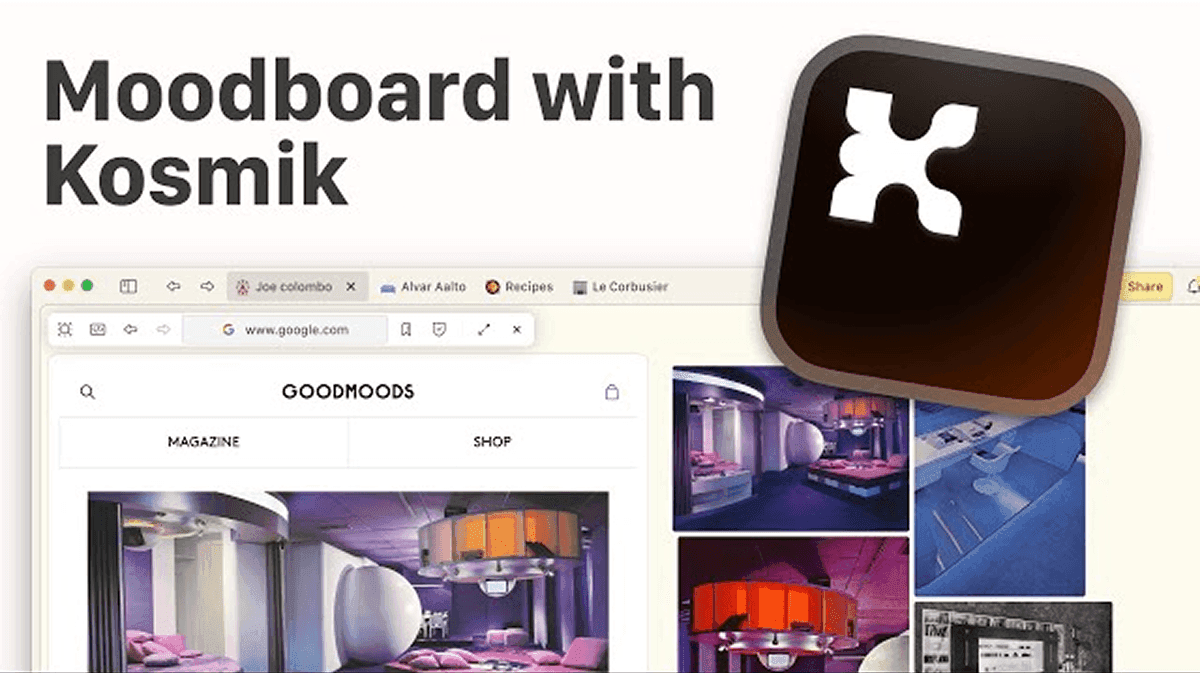 Modern mood board tools blend AI generation with intelligent organization. Source
The New Standard: AI-Assisted Discovery, Not Just Collection
Traditional mood boarding was fundamentally about curation. You'd hunt across platforms, save images, and arrange them into coherent visual stories. The 2026 generation of tools flips this model.
Now, the best platforms combine:
- AI generation that creates visuals based on conceptual descriptions
- Smart categorization that auto-tags images by mood, style, and composition
- Intelligent search that discovers related content from across the web
- Flexible workspaces that support both structured boards and free-form exploration
This isn't about replacing human judgment. It's about accelerating the discovery phase so you spend less time hunting and more time refining your visual direction.
Top Free AI-Powered Mood Board Generators
Firefly Boards: Adobe's Generative Ecosystem
Adobe Firefly Boards represents Adobe's answer to AI-assisted mood boarding, and it's completely free with an Adobe account. The platform integrates seamlessly into the Adobe ecosystem, making it ideal for designers already working in Photoshop, Illustrator, or InDesign.
What makes it stand out:
- Generative AI creation lets you describe concepts and generate new visuals directly on your board
- Stock asset integration pulls from Adobe Stock without leaving your workspace
- Style remixing applies different visual treatments to existing images
- Templates provide structured starting points for brand identity, packaging, or campaign work
Firefly Boards excels for designers who need to move quickly from mood board to production. Because it's part of the Adobe ecosystem, assets flow directly into your design files. The generative features mean you're not limited to existing imagery—you can create placeholder visuals, explore variations, or fill gaps in your visual narrative.
The tool serves creative professionals across disciplines: graphic designers defining brand aesthetics, interior decorators visualizing spatial concepts, or product teams aligning on visual direction.
Kosmik: The Best Overall AI-Assisted Platform
Kosmik has earned recognition as the best overall AI-assisted moodboarding tool for a simple reason: it helps you find inspiration, not just organize it.
Key strengths:
- AI auto-tagging automatically categorizes uploaded images by style, color, mood, and content type
- Computer vision asset finder discovers related content from YouTube, Pinterest, and web sources
- Infinite canvas provides spatial freedom for organic exploration
- Smart search lets you query your collection by visual attributes, not just filenames
Where most tools stop at organization, Kosmik actively contributes to discovery. Upload a reference image and the AI finder surfaces related visual examples you might not have encountered. Tag an image as "warm, textured, handcrafted," and the search instantly filters your entire collection to matching aesthetics.
The infinite canvas approach feels particularly natural for early-stage brand discovery. You're not forcing ideas into rigid grids—you're mapping visual relationships spatially, clustering similar concepts, and letting themes emerge organically.
 Kosmik's infinite canvas and AI auto-tagging enable organic visual exploration. Source
Venngage's AI Moodboard Generator: Concept to Cohesive Board
Venngage's AI Moodboard Generator takes a different approach: you describe your vision, and AI builds the entire board.
Instead of starting with a blank canvas and hunting for references, you input conceptual direction—"minimalist wellness brand with earthy tones and organic textures"—and the AI assembles a cohesive mood board complete with images, color palettes, and design elements.
Why it's valuable:
- Speed gets you from concept to visual direction in seconds
- Cohesion ensures all elements share a unified aesthetic
- Editable starting point provides a foundation you can refine
- Drag-and-drop editor makes customization intuitive
This works especially well for fast-paced brand discovery where you need to visualize multiple directions quickly. Generate three variations, present to stakeholders, and refine the winning approach. It's perfect for early creative exploration or client presentations where speed matters.
The trade-off is less personal curation. You're working with AI-selected imagery rather than hand-picked references, which means the boards can feel slightly generic. But as a starting point for discussion and refinement, they're remarkably effective.
Canva: Template Library Meets Generative AI
Canva has evolved from a template platform into a hybrid mood boarding solution that combines its massive design library with AI generation.
What it offers:
- Huge template library provides structured starting points for any industry or style
- Drag-and-drop simplicity makes board creation fast and accessible
- AI text-to-image generates custom visuals when you can't find the right reference
- Free plan enables full mood board creation without cost
- Collaboration features let teams build boards together
Canva's strength is accessibility combined with speed. The templates mean you're never starting from zero, and the drag-and-drop interface removes technical friction. For designers who need to create quick boards for client presentations or internal alignment, it's hard to beat.
The AI generation adds a valuable wildcard. Can't find the exact color palette or composition you're imagining? Describe it and generate a placeholder that communicates the direction.
Where Canva falls short is sophistication. Power users will find the organizational features limited compared to Kosmik, and the aesthetic can skew toward "template-polished" rather than raw discovery.
Why illustration.app Fits Your Mood Board Workflow
Once you've defined your visual direction through mood boarding, you need brand-consistent illustrations that match that aesthetic. This is where illustration.app becomes essential.
Unlike generic AI generators that produce one-off images with inconsistent styles, illustration.app is purpose-built for creating cohesive illustration sets that maintain the same visual language across all your brand assets.
How it connects to mood boarding:
- Style consistency ensures every illustration matches your defined brand aesthetic
- Fast generation produces entire illustration packs aligned to your mood board direction
- SVG export delivers scalable assets ready for web, print, or product design
- No prompt engineering means you focus on creative direction, not technical prompting
Your mood board defines the what—the colors, textures, emotions, and visual territory. illustration.app delivers the how—production-ready illustrations that bring that vision to life across landing pages, marketing materials, and brand touchpoints.
This workflow—mood board for discovery, illustration.app for execution—creates a seamless path from inspiration to implementation. Learn more about building consistent visual identities in our guide on building a consistent brand identity with AI illustrations.
Choosing the Right Tool for Your Discovery Process
Different design challenges demand different mood boarding approaches:
For fast client presentations: Venngage's AI generator creates polished boards in seconds, perfect for early-stage concept validation.
For deep visual exploration: Kosmik's infinite canvas and smart search enable organic discovery and spatial relationship mapping.
For Adobe-centric workflows: Firefly Boards integrates seamlessly with your existing Creative Cloud toolkit, streamlining the path from mood board to production.
For accessible team collaboration: Canva's template library and simple interface remove barriers for non-designers contributing to visual direction.
For comprehensive brand systems: Combine any of these tools for discovery, then use illustration.app to generate brand-consistent illustration sets that match your defined aesthetic.
 Different mood board approaches serve different discovery needs. Source
The AI Advantage: From Collection to Collaboration
What separates 2026's mood board tools from earlier generations isn't just AI generation—it's AI assistance across the entire discovery process.
Smart categorization means you can actually find that perfect reference you saved three months ago. Visual search discovers related content you wouldn't have thought to hunt for. Auto-tagging creates organizational structure without manual labor.
These features transform mood boarding from a solitary collection activity into a collaborative discovery platform. Teams can build boards together, AI surfaces unexpected connections, and the tool actively contributes creative suggestions rather than just storing your choices.
The result is faster brand discovery with richer visual exploration. You spend less time on mechanical tasks (searching, organizing, categorizing) and more time on creative judgment (which direction feels right, what relationships matter, where to push further).
Beyond Static Boards: Dynamic Visual Discovery
The shift toward AI-powered mood boarding reflects a broader trend in design tooling: from static repositories to dynamic assistants.
Traditional mood boards were archives. You collected references, arranged them aesthetically, and presented the result. Modern platforms are active participants in your creative process—generating options, discovering connections, and suggesting directions.
This doesn't diminish the designer's role. If anything, it elevates it. You're freed from mechanical hunting to focus on the higher-order questions: What emotional territory are we claiming? Which visual language communicates our brand values? How do we balance familiarity with differentiation?
The tools handle discovery and organization. You provide creative judgment and strategic direction.
For designers exploring broader visual trends, our piece on 10 design trends fading out in 2026 and what replaces them offers context on where brand aesthetics are heading.
Practical Workflow: From Mood Board to Brand Assets
Here's how these tools fit into a complete brand discovery workflow:
- Start broad with Kosmik or Canva to gather initial inspiration and explore visual territory
- Use Firefly's generative AI to fill gaps or create specific compositions you can't find
- Refine with Venngage to test cohesive board variations for stakeholder feedback
- Define final direction based on team alignment and strategic fit
- Generate brand-consistent illustrations with illustration.app that match your mood board aesthetic
- Build design systems using tools like Figma to operationalize your visual language
This workflow moves efficiently from open exploration to concrete deliverables, with AI tools accelerating each phase without replacing creative judgment.
 Effective mood boards balance structure with creative exploration. Source
When to Use Paid Alternatives
The free tools covered here handle most brand discovery needs, but paid platforms offer advantages for specific scenarios:
Adobe Firefly (full subscription) at $9.99/month adds unlimited generative credits and expanded Creative Cloud integration.
MyMap.AI (around $10/month) provides AI-driven visual mapping for complex brand systems and strategic planning.
Milanote serves creative professionals needing polished visual boards with web clippers, annotations, and client-ready presentation modes.
For most designers doing brand discovery, the free tier of Kosmik, Firefly Boards, or Canva provides everything needed. Upgrade when project complexity, team size, or client presentation requirements justify the investment.
The Future of Brand Discovery
AI-powered mood boarding represents a fundamental shift in how designers approach visual exploration. We're moving from manual collection to assisted discovery, from static boards to dynamic creative partners, and from isolated tools to integrated workflows.
The best platforms in 2026 don't just organize your inspiration—they help you find it, understand it, and transform it into actionable brand systems. Combined with purpose-built tools like illustration.app for generating brand-consistent visuals, this ecosystem enables faster, richer brand discovery without sacrificing creative control.
The mood board is no longer a static deliverable. It's the beginning of a continuous visual conversation between designer, AI assistant, and brand vision—one that flows seamlessly from inspiration to implementation.