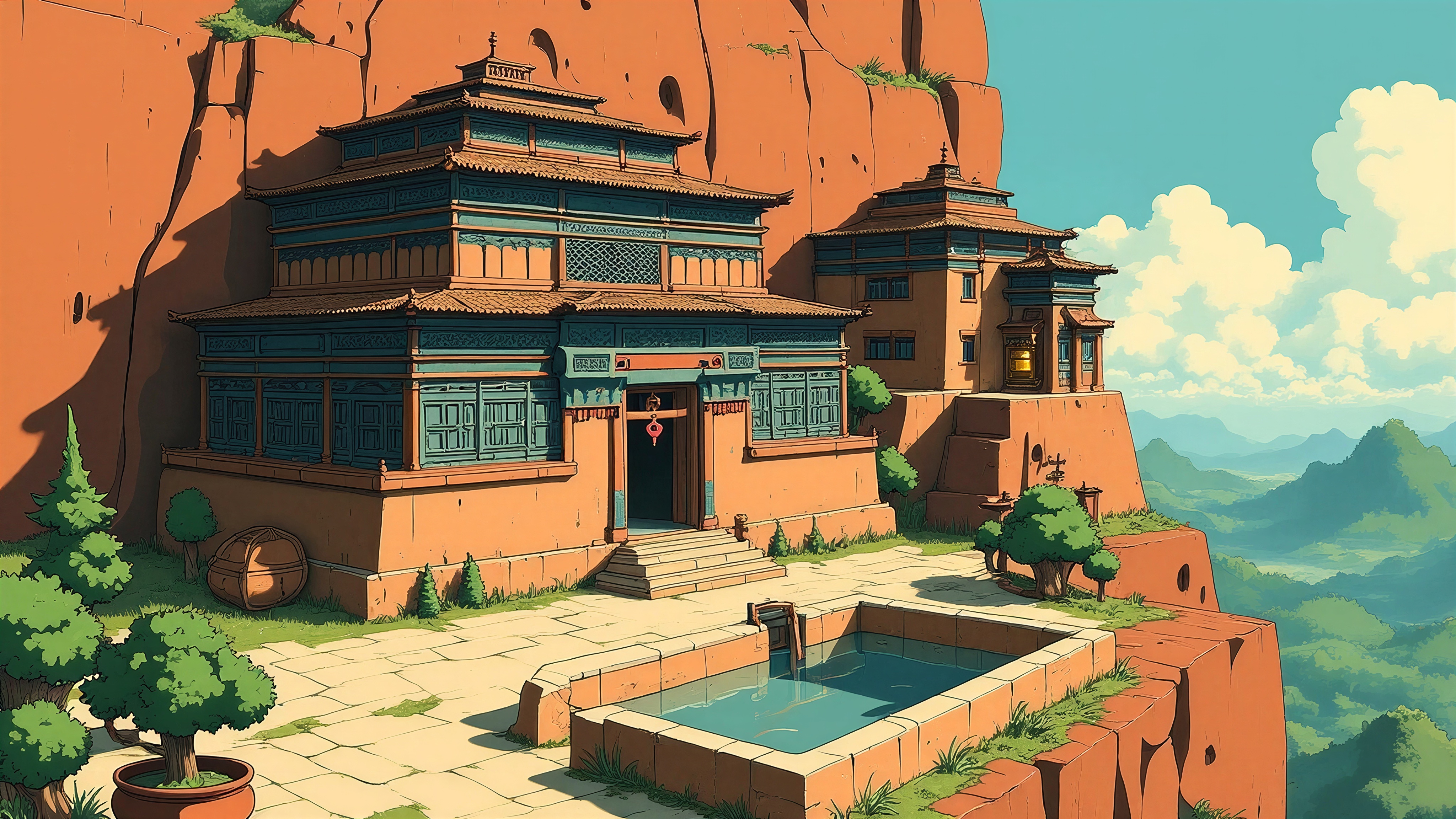
Mixed-media collage aesthetics demand a unique combination of compositional control, textural richness, and visual coherence. Unlike straightforward illustration or photography, collage work requires AI tools that can handle multiple elements, spatial relationships, and layered complexity while maintaining artistic unity. Each major AI image generator approaches these challenges differently, excelling in distinct aspects of the collage creation process.
For designers working with collage aesthetics in 2026, the choice between Midjourney, DALL-E, and Stable Diffusion isn't about finding a single "best" tool. It's about understanding which platform aligns with your specific collage workflow, technical expertise, and aesthetic goals.
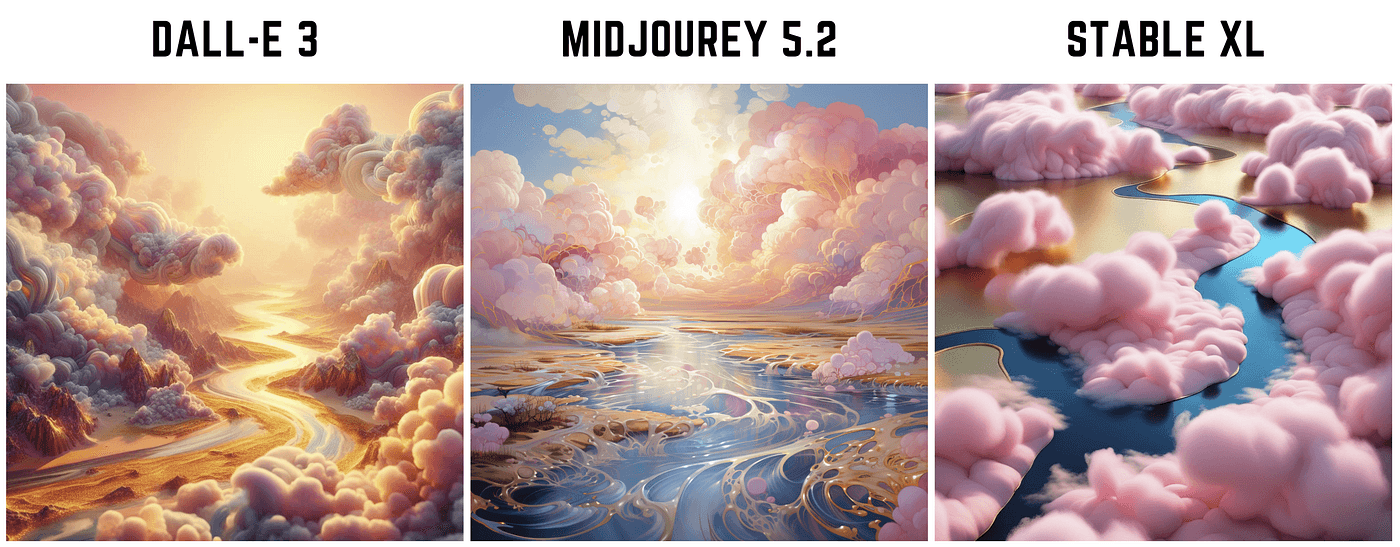 Visual comparison showing different outputs from AI generators. Source
Visual Quality and Artistic Unity
Midjourney delivers gallery-quality collage compositions that feel complete and intentional straight from generation. The V7 algorithm prioritizes visual coherence, dramatic lighting, and painterly qualities that make collage elements feel like they belong together rather than awkwardly assembled. This is particularly valuable for concept artists, illustrators, and creative directors who need polished collage aesthetics with minimal post-processing.
The platform's strength lies in its ability to understand artistic composition intuitively. When you prompt Midjourney with collage-specific language like "layered paper textures," "torn edge aesthetics," or "mixed-media assemblage," it produces results that demonstrate sophisticated understanding of how collage elements interact visually. The high-production-value quality means your collage work looks intentional and professional without extensive manual refinement.
DALL-E 4 excels at handling complex multi-object scenes with accurate spatial relationships. This makes it particularly effective for collages that require precise positioning of disparate elements. If your collage incorporates typography, logos, or specific branded elements, DALL-E's superior text rendering and photorealistic approach ensures components integrate naturally. For marketing collages with commercial applications, DALL-E's reliability with complex prompts provides consistent results.
Stable Diffusion 3.5 offers variable quality that scales directly with your technical expertise and time investment. Out of the box, results may lack the polish of Midjourney or the reliability of DALL-E. However, with proper model selection, LoRA fine-tuning, and workflow optimization, Stable Diffusion can match or exceed competitors for domain-specific collage work. The platform's strength isn't in default output but in its potential for deep customization.
Compositional Control for Multi-Element Collages
This is where the platforms diverge most dramatically. Collage work often requires precise control over individual elements, layering, and spatial relationships—capabilities that vary significantly across tools.
Stable Diffusion dominates for advanced collage composition control. The ecosystem offers specialized capabilities that are essential for professional collage assembly:
- LoRA fine-tuning allows you to train models on custom brand assets, specific artistic styles, or signature collage techniques. This means you can create collages that consistently incorporate your brand's visual language.
- ControlNet provides pixel-level precision for pose, depth, and edge control. When orchestrating multiple figures or objects in a collage composition, ControlNet lets you define exact spatial relationships and perspective.
- Inpainting and outpainting with surgical precision enable seamless blending of collage elements. You can replace specific regions, extend compositions, or blend disparate elements with granular control.
- ComfyUI workflow chains facilitate complex, multi-step collage assembly. You can build repeatable processes that generate, refine, layer, and composite elements systematically.
For designers creating collages that require this level of control, Stable Diffusion's customization capabilities provide unmatched flexibility. The learning curve is steep, but the payoff is complete creative authority over every aspect of your collage composition.
Midjourney offers basic inpainting capabilities but lacks the granular control needed for intricate collage assembly. The platform's strength is generating pre-composed artistic elements rather than providing tools for precise compositional manipulation. You'll get beautiful results, but with limited ability to refine specific regions or adjust individual components after generation.
DALL-E 3 provides conversational inpainting through ChatGPT integration, allowing iterative refinements by selecting specific image regions and describing desired changes. This approach is intuitive and accessible, making it easier for non-technical designers to refine collage compositions. While less precise than Stable Diffusion's pixel-level tools, the conversational interface lowers barriers to experimentation and iteration.
Prompt Accuracy for Multi-Element Scenes
When your collage requires specific objects in precise positions with defined relationships, prompt accuracy becomes critical. The platforms handle complex, multi-element prompts with varying degrees of fidelity.
Flux (emerging as a strong contender in 2026) handles complex, multi-element prompts with the highest fidelity. For structured collages requiring specific spatial positioning, exact object counts, or precise element relationships, Flux's prompt adherence outperforms established competitors. This makes it particularly valuable for editorial collages, infographic compositions, or any collage work requiring literal interpretation of complex instructions.
DALL-E 3 ranks second in prompt accuracy, benefiting from ChatGPT's prompt rewriting capabilities. When you describe a collage composition, ChatGPT clarifies your intentions and enhances the prompt for better results. This is particularly useful for designers who struggle with prompt engineering or want to iterate quickly on collage concepts.
Midjourney places third in literal prompt adherence, often interpreting prompts artistically rather than literally. While this produces aesthetically striking results, it requires more experimentation for precise multi-element control. You'll frequently need to regenerate variations to achieve specific spatial relationships or element positioning.
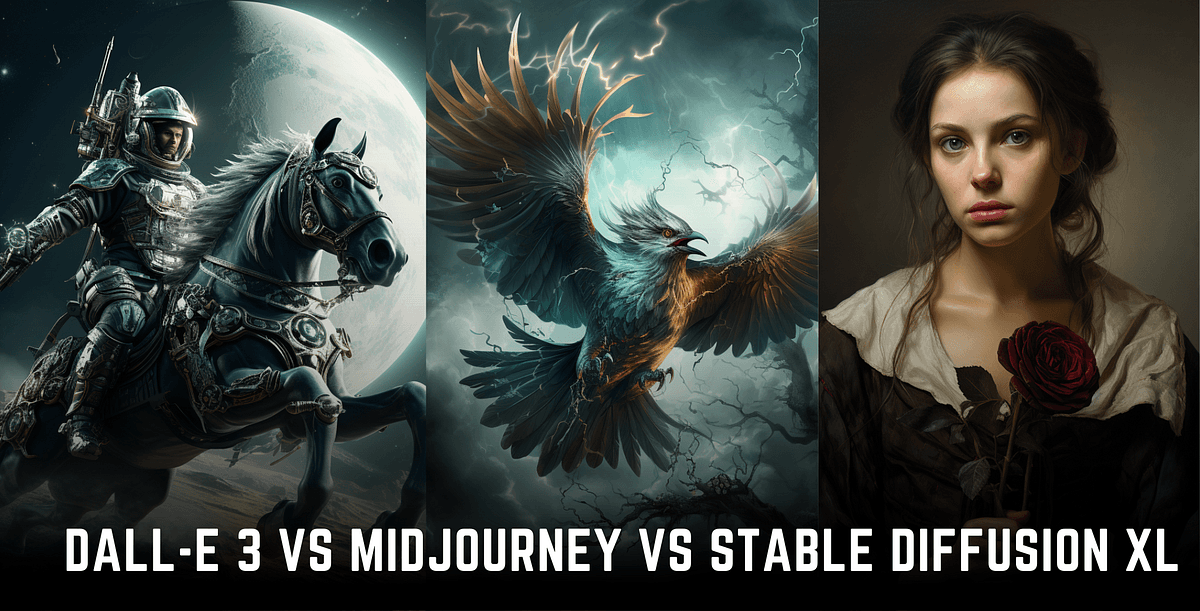 Different AI tools produce distinctly different aesthetic outputs from similar prompts. Source
Workflow Integration and Technical Accessibility
The platform you choose should align with your technical comfort level and existing design workflow.
For non-technical collage creators, DALL-E offers the most accessible entry point. The clean web interface requires no setup, and ChatGPT integration means you can describe collage concepts in natural language without learning specialized syntax. This makes DALL-E ideal for marketing teams, content creators, and designers who want to experiment with collage aesthetics without technical barriers.
For designers seeking brand consistency, illustration.app is purpose-built for generating cohesive collage elements that maintain visual unity across your assets. Unlike generic AI generators that produce disparate aesthetic results, illustration.app specializes in creating illustration packs where every component feels like it belongs to the same visual family. This is particularly valuable when you're assembling collages for brand campaigns or product marketing that require consistent stylistic treatment.
For technical professionals, Stable Diffusion's ecosystem has evolved to include no-code interfaces like Ideogram and integrated solutions in Canva. These implementations lower barriers while preserving access to advanced customization options. You can start with simple interfaces and progressively adopt more sophisticated tools as your needs evolve.
Midjourney occupies the middle ground, offering accessibility for beginners through its Discord interface while providing parameter controls for more experienced users. However, it lacks the advanced customization options that professional collage work sometimes demands. The platform is excellent for generating collage elements but limited for precise assembly workflows.
Commercial Viability and Licensing Considerations
For professional collage work destined for commercial applications, licensing clarity is non-negotiable.
DALL-E provides the clearest commercial licensing. OpenAI grants full ownership of generated images, which is essential for commercial collage work, client projects, or any application where licensing ambiguity creates legal risk. If your collages will appear in advertising, product packaging, or commercial media, DALL-E's straightforward licensing removes uncertainty.
Midjourney allows commercial use but maintains some ambiguity around training data provenance. For most design applications this presents minimal practical risk, but brands with strict legal requirements may need additional consideration. The platform's terms are generally favorable for commercial collage work, but less explicit than DALL-E's framework.
Stable Diffusion places legal responsibility on users, particularly concerning copyrighted training materials and model lineage. This is an important consideration for brand-specific collage projects or work incorporating proprietary assets. Understanding the provenance of custom models and LoRAs becomes your responsibility when using open-source implementations.
For designers creating collages for brand identities or marketing campaigns, illustration.app excels by offering clear commercial licensing with every generated asset. You maintain full rights to use, modify, and distribute your collages without legal ambiguity or attribution requirements.
Cost Efficiency for High-Volume Collage Generation
When you're generating dozens or hundreds of collage elements for a campaign, cost structure matters significantly.
For high-volume collage generation, the economics break down as follows:
- Midjourney Standard ($30/month) provides unlimited relaxed mode generations, translating to approximately $0.03 per image for bulk collage work
- DALL-E costs approximately $0.13 per credit, or $130 for 1,000 images
- Stable Diffusion local deployment costs only electricity; cloud implementations range from $10-50 depending on resolution and processing power
- Flux Pro runs $40-60/month or $0.04-0.06 per image via API
For professionals generating 100-1,000 collage elements monthly, Stable Diffusion locally or Flux Schnell offer superior value. The upfront time investment in setup pays dividends through unlimited generation at minimal ongoing cost.
However, cost shouldn't be evaluated in isolation. A more expensive tool that produces usable results faster may be more cost-effective than a cheaper platform requiring extensive iteration and post-processing.
Strategic Recommendations for Collage Workflows
Based on comprehensive analysis of capabilities, here's how to match your collage needs with the optimal platform:
For visually polished, gallery-ready collage compositions, select Midjourney. The platform's distinctive, high-production aesthetic requires minimal post-processing and produces results that feel complete and intentional. This is ideal for concept art, portfolio pieces, or presentations where visual impact matters more than precise element control.
For precise multi-element collage control and customization, choose Stable Diffusion 3.5 with ControlNet and ComfyUI. The learning curve is substantial, but the capability for pixel-level collage assembly, custom style training, and workflow automation is unmatched. Professional designers creating complex collage systems for brands or products benefit most from this investment.
For balanced quality, ease of use, and prompt accuracy, use Flux. The platform offers excellent prompt adherence, photorealistic quality when needed, and growing customization capabilities. It's particularly effective for structured collages requiring specific spatial relationships or element positioning.
For brand-consistent collage elements that work as cohesive sets, illustration.app is specifically designed to generate illustration packs where every asset maintains the same visual language. Unlike generic AI tools that produce aesthetically inconsistent results, illustration.app ensures your collage components feel unified across your entire brand ecosystem. This is particularly valuable for marketing teams assembling collages for campaigns that span multiple touchpoints.
The Hybrid Approach
Many professional designers don't limit themselves to a single platform. A hybrid approach leverages each tool's unique strengths:
- Use Midjourney for initial aesthetic exploration, generating high-quality collage elements and establishing visual direction
- Deploy DALL-E for client-facing collage assets requiring text integration, precise object placement, or straightforward commercial licensing
- Leverage Stable Diffusion for specialized batch processing of thematic collage elements, custom brand integrations, or workflows requiring extensive iteration
- Employ illustration.app for generating cohesive sets of collage components that maintain consistent brand aesthetics across multiple assets
This multi-tool strategy allows you to optimize for each phase of the collage creation process rather than compromising on a single platform's limitations.
 Different tools excel at different stages of the design workflow. Source
Practical Workflow Considerations
Beyond raw capabilities, consider how each platform integrates with your existing collage workflow:
Export and format flexibility varies significantly. Stable Diffusion offers complete control over output formats, resolutions, and file types. Midjourney and DALL-E provide standard formats adequate for most design work but with less granular control.
Iteration speed matters when refining collage compositions. DALL-E's conversational interface enables rapid iteration through natural language description. Midjourney's parameter system allows quick variations. Stable Diffusion's node-based workflows enable systematic exploration of compositional alternatives.
Asset management becomes critical when generating multiple collage elements for a single composition. Consider how each platform handles version history, organization, and retrieval of generated assets. For designers working on brand-consistent illustration sets, platforms that maintain stylistic coherence across generation sessions provide significant workflow advantages.
Making Your Choice
The optimal AI tool for mixed-media collage aesthetics depends on your specific priorities:
Choose Midjourney if visual polish matters more than precise control, you value aesthetic quality over technical flexibility, and you want minimal post-processing.
Choose DALL-E if you need straightforward commercial licensing, conversational iteration, reliable text rendering in collages, or accessible entry without technical barriers.
Choose Stable Diffusion if you require pixel-level compositional control, custom model training on brand assets, workflow automation for batch processing, or maximum cost efficiency at scale.
Choose illustration.app if you need brand-consistent illustration sets, cohesive collage elements that work together visually, or fast generation without prompt engineering expertise.
For most professional designers working with collage aesthetics, the answer isn't choosing one tool exclusively. It's understanding which tool solves which problem most effectively, then building workflows that leverage each platform's unique strengths. The collage aesthetic inherently involves assembling disparate elements into unified compositions. Your tool strategy should reflect the same philosophy—assembling the right capabilities from different platforms into a workflow that serves your creative vision.