
Brands are shifting from static visuals to interactive, spatial experiences that captivate audiences and drive conversions. AI-powered 3D tools are leading this transformation, enabling designers to create immersive environments, AR try-ons, virtual showrooms, and product visualizations in minutes rather than weeks.
According to Engine Creative, 80% of consumers now prioritize experiences over products alone. AI-driven 3D tools meet this demand by democratizing immersive design, letting brands compete with spatial storytelling that was once exclusive to enterprises with massive budgets.
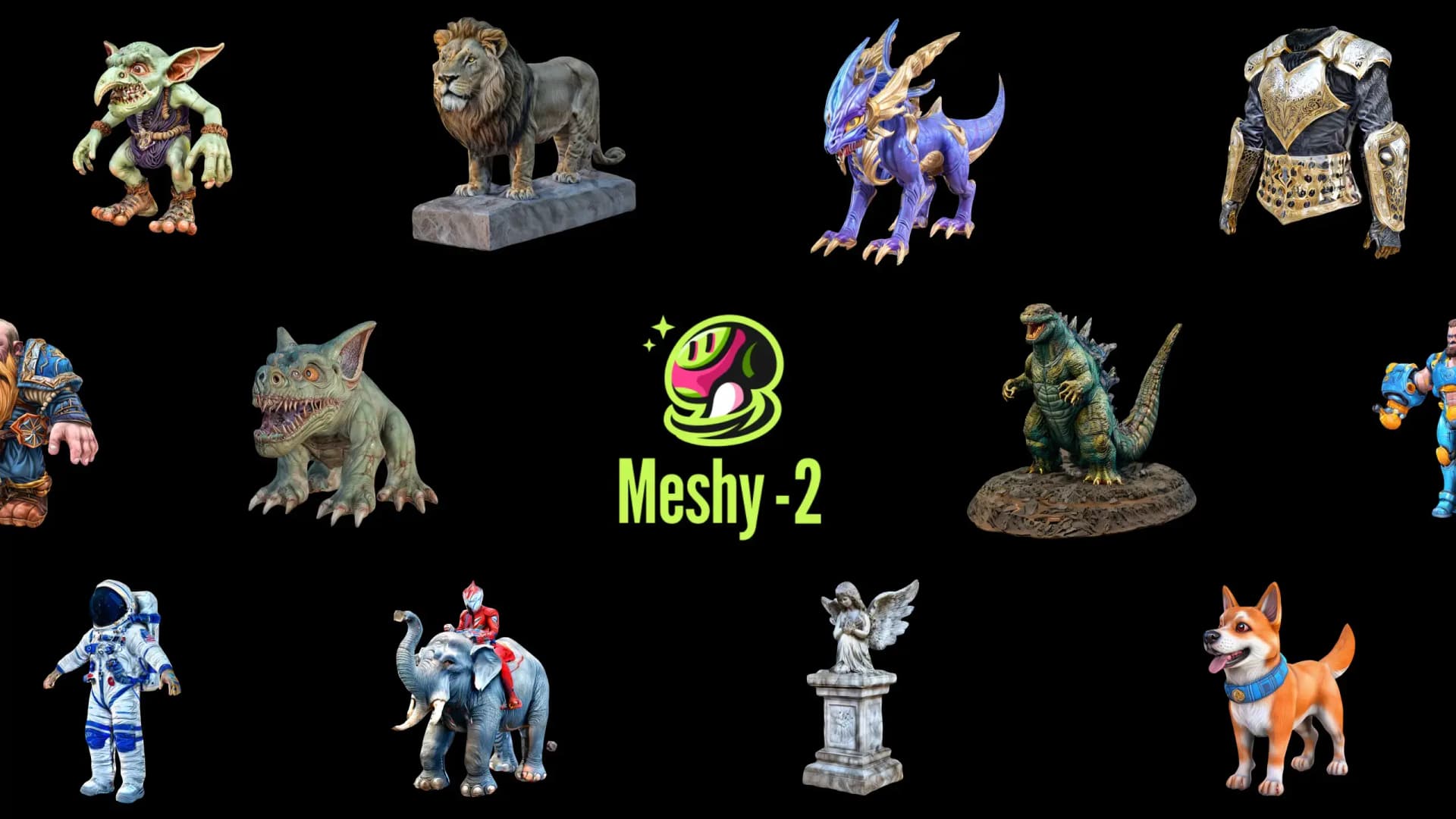 Meshy AI 2.0 demonstrates rapid text-to-3D generation with PBR textures. Source: Meshy AI Blog
Why AI-Powered 3D Tools Matter for Brand Design
Traditional 3D modeling requires specialized skills and weeks of iteration. AI changes the equation. Tools like Meshy AI 2.0, Luma AI Genie 2, and Spline AI generate production-ready 3D assets from text prompts in under a minute, with photorealistic textures and game-ready exports.
The ROI is measurable. ASOS reported a 25% conversion lift after implementing Cinema 4D's AR try-on features. Zara achieved 40% faster design cycles and 75% cost savings using Style3D's physics-based fabric simulations. Architecture firms reduced material waste by 30% using Blender's sustainability-focused workflows.
For designers, this means fewer technical barriers and more creative freedom. You don't need to master Blender's node editor or Maya's rigging systems. AI tools abstract complexity while preserving creative control.
Top AI-Powered 3D Tools for Brand Experiences
Meshy AI 2.0: Production-Ready Game Assets and AR Content
Meshy AI 2.0 excels at text-to-3D and image-to-3D generation with PBR (Physically Based Rendering) textures and automatic rigging for game-ready assets. This makes it the top choice for brands creating AR/VR content and interactive marketing experiences.
Key strengths:
- Generates 3D models in under 60 seconds from text or images
- PBR texture mapping produces realistic materials (metal, fabric, glass)
- Automatic rigging for animation and interactivity
- Exports to FBX, OBJ, USDZ for seamless workflow integration
Pricing: Free tier available, then $16-60/month depending on generation volume.
Best for: E-commerce product visualization, game-like brand interactions, AR try-ons, and virtual showrooms where texture quality and animation-ready exports matter.
Experts on Viz-CAD note Meshy's textures are production-ready for concept art and marketing materials, though they recommend additional refinement for final game assets.
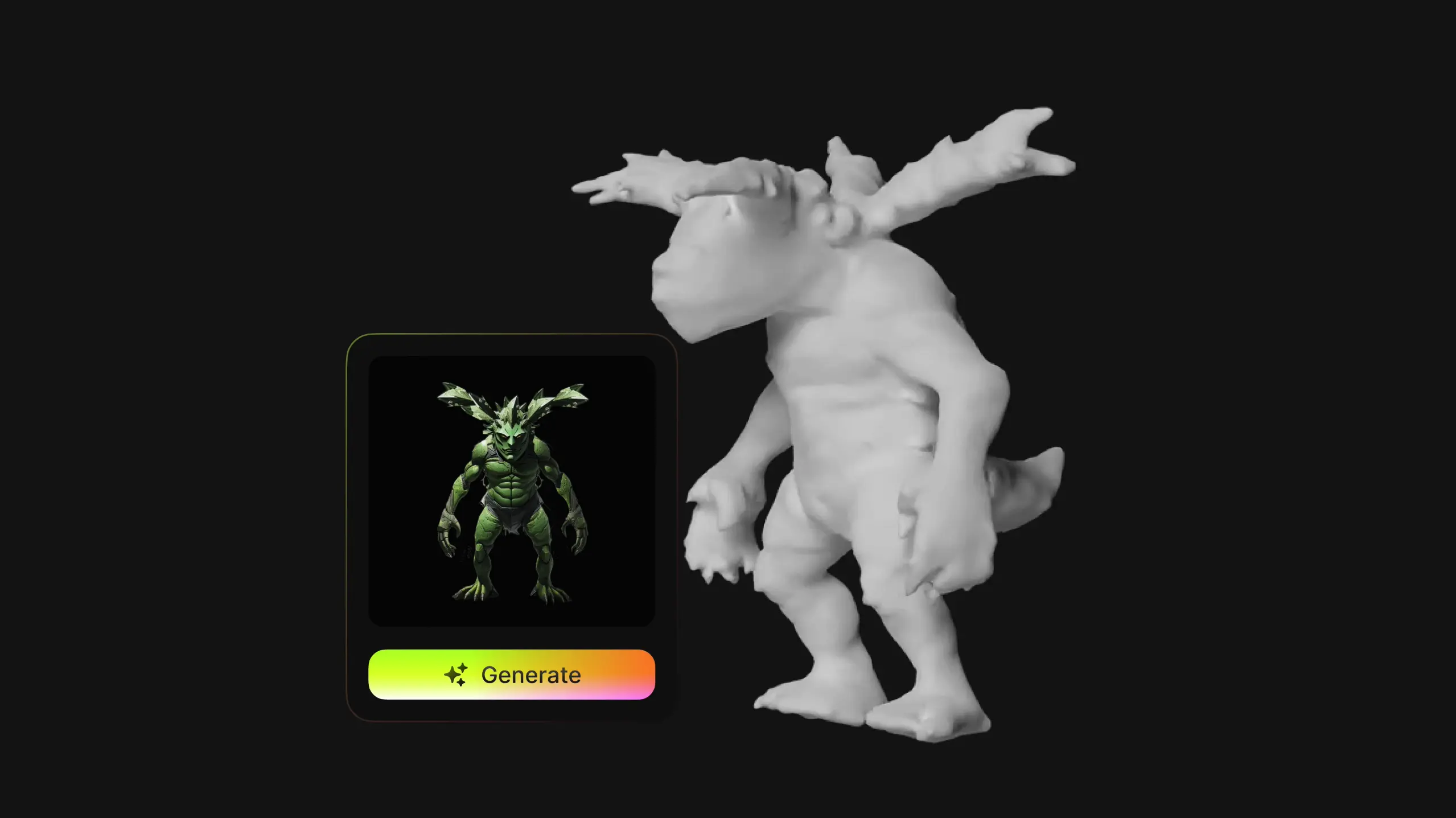 PBR textures generated by Meshy AI show realistic material properties. Source: Meshy AI Blog
Luma AI Genie 2: Photorealistic Product Visualization
Luma AI Genie 2 combines text-to-3D generation with photogrammetry and 4K texture resolution, making it ideal for photorealistic product visualization and real-object scanning for ads.
Key strengths:
- Exceptional realism for e-commerce applications
- 4D capture technology for dynamic product shots
- Real-object scanning via mobile photogrammetry
- Exports to standard 3D formats with high-resolution textures
Pricing: Free tier available, $29.99/month for pro features.
Best for: Product photography replacement, virtual catalogs, and brands needing photorealistic visuals that rival traditional studio shoots.
According to 3DAI Studio, Luma's realism makes it comparable to the AR try-on technology that boosted ASOS's conversions by 25%.
Spline AI: Interactive 3D Web Experiences
Spline AI specializes in browser-based 3D design with text-to-3D generation for web interfaces and interactive prototyping. Unlike tools focused on offline rendering, Spline is purpose-built for live web experiences.
Key strengths:
- Browser-native 3D design (no downloads required)
- Real-time collaboration like Figma
- Physics simulations and interactive prototyping
- Direct export to React, Vue, and vanilla JavaScript
Pricing: Free tier, $9-40/month for advanced features.
Best for: Interactive brand websites, immersive UIs, virtual showrooms, and brands wanting 3D experiences without WebGL coding.
For designers building interactive 3D web experiences, Spline offers the fastest path from concept to deployment. Its AI-powered modeling reduces manual work while maintaining real-time performance.
Style3D Platform: Fashion and Apparel Design
Style3D Platform uses sketch-to-3D AI and physics-based fabric simulation, making it the industry standard for fashion brands and virtual try-ons.
Key strengths:
- Realistic fabric draping and physics
- Virtual try-on technology
- Rapid prototyping reduces sample production
- Sustainability focus (fewer physical samples)
Pricing: Custom enterprise pricing.
Best for: Fashion brands, textile design, virtual fashion shows, and brands prioritizing sustainable design practices.
Zara's 40% faster design cycles prove the ROI. By eliminating physical prototypes, Style3D cuts both time and material waste, aligning with 2026's sustainability mandates.
3DAI Studio: Multi-Model Testing Suite
3DAI Studio offers access to multiple AI 3D generators (Meshy, Rodin, Tripo) through a single subscription, making it the most cost-effective option for brands testing different outputs for campaigns.
Key strengths:
- Single subscription accesses multiple AI models
- Text, image, and video-to-3D conversion
- Side-by-side comparison for quality testing
- 5-7x cost savings versus individual subscriptions
Pricing: $14/month for 1,000 credits.
Best for: Brands experimenting with AI 3D workflows, agencies managing multiple client styles, and teams wanting flexibility without vendor lock-in.
According to BuildMVPFast, 3DAI Studio's multi-model access is the best value for brands still determining which AI 3D aesthetic fits their brand identity.
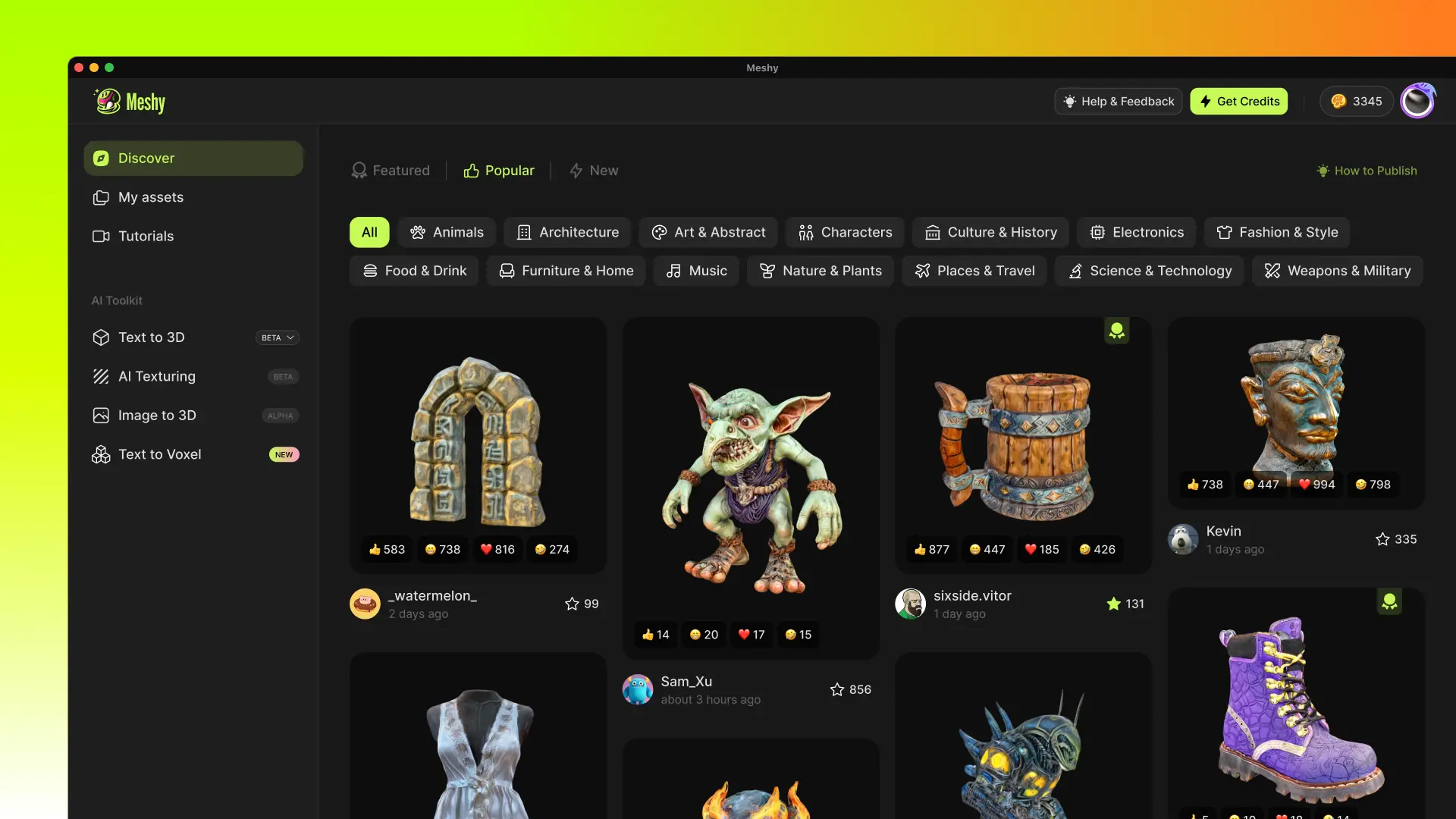 AI-generated 3D models demonstrate production-ready quality for marketing and visualization. Source: Meshy AI Blog
How AI 3D Tools Drive Immersive Brand Experiences
Virtual Showrooms and Product Configurators
Brands are replacing static product pages with interactive 3D configurators. Customers rotate, zoom, and customize products in real time. AI tools like Meshy and Spline generate these assets in minutes, not weeks.
Example workflow:
- Generate base 3D model from product photo using Luma AI
- Add interactive elements in Spline
- Export to web with physics-enabled customization
- Integrate AR preview for mobile devices
This workflow previously required a full 3D team. Now, a single designer can execute it in hours.
AR Try-Ons and Virtual Fitting
Fashion, eyewear, and furniture brands use AR try-ons to reduce returns and increase confidence. Cinema 4D 2026's Gaussian splatting and ASOS's 25% conversion lift validate the approach.
AI tools accelerate this by generating 3D assets from 2D product photos. Luma AI's photogrammetry captures real-world products as 3D models in minutes, ready for AR integration.
Spatial Events and Digital Twins
Brands create virtual event spaces, digital showrooms, and architectural visualizations using AI-powered 3D tools. Dassault Systèmes showcased AI photogrammetry at 3DEXPERIENCE World 2026, demonstrating rapid 3D capture from photos and videos.
Use cases:
- Virtual trade show booths
- Product launch environments
- Brand heritage museums
- Training simulations
These experiences keep audiences engaged longer, with measurable dwell time and interaction metrics.
E-Commerce Product Visualization
Static product images lose to interactive 3D models. AI tools enable brands to generate 360° views, zoom-enabled details, and contextual environments without expensive photo shoots.
Workflow example:
- Scan product with Luma AI's mobile photogrammetry
- Generate 3D model with 4K textures
- Place in branded environment using Spline
- Export for web with AR preview button
This approach reduces photography costs while increasing engagement. Users spend 2-3x longer on pages with interactive 3D versus static images.
Trends Shaping AI 3D Brand Experiences in 2026
AI as a Decision-Making Companion
According to Engine Creative, AI is shifting from tool to collaborator. Brands use AI to generate spatial experiences, test configurations, and optimize layouts based on user interaction data.
This aligns with Gartner's predictions that immersive, experience-led design becomes a core competitive strategy, not a novelty.
Sustainability Through Virtual Prototyping
Physical samples are wasteful. AI 3D tools eliminate them. Style3D's case studies show 75% cost savings and massive material reductions.
Architecture firms use Blender with AI add-ons to reduce material waste by 30%, simulating designs virtually before construction begins.
Production-Ready Outputs (Almost)
AI 3D tools aren't perfect for final game assets yet. Experts like Travis Vermilye note that Meshy and Rodin excel for concept art and marketing, but require refinement for production game drops.
However, for brand experiences, marketing visuals, and product visualization, these tools deliver production-ready quality. The gap is closing fast.
Multi-Model Workflows Cut Costs 5-7x
Instead of subscribing to individual tools, designers access platforms like 3DAI Studio that bundle multiple AI models. This reduces subscription costs by 5-7x while letting teams test outputs from Meshy, Rodin, and Tripo side-by-side.
Choosing the Right AI 3D Tool for Your Brand
For e-commerce and product visualization: Choose Luma AI Genie 2 for photorealism or Meshy AI 2.0 for AR-ready assets with PBR textures.
For interactive web experiences: Spline AI offers the fastest path from concept to live 3D web interfaces.
For fashion and apparel: Style3D Platform is the industry standard, proven by Zara's 40% cycle time reduction.
For experimentation and flexibility: 3DAI Studio gives access to multiple AI models for side-by-side testing at the lowest cost.
For enterprise-scale geometry and detail: Rodin Gen-1 (via Microsoft Azure) excels at high-polygon models for luxury brands and 3D printing applications.
When building motion-first brand identities, AI 3D tools integrate seamlessly with motion design workflows, creating adaptive experiences that respond to user interaction.
Practical Tips for Using AI 3D Tools
Start with free tiers. Every tool mentioned offers free or trial access. Test outputs against your brand guidelines before committing.
Prioritize AR/VR export formats. USDZ (Apple) and glTF (web/Android) are standard. Ensure your tool exports to these formats natively.
Focus on texture quality. PBR textures (Meshy, Luma) look realistic across lighting conditions. This matters for product visualization and AR.
Combine tools for best results. Generate base models in Luma, refine textures in Meshy, and add interactivity in Spline. Multi-tool workflows maximize quality.
Test on target devices. A 3D model that runs smoothly on desktop might lag on mobile. Optimize polygon counts for your audience's devices.
Use AI for iteration speed. Generate 10 variations in the time it takes to manually model one. AI's strength is rapid exploration, not perfection.
Integrating AI 3D Tools with Existing Design Workflows
For brand-consistent visual assets that complement 3D experiences, illustration.app excels at generating cohesive illustration sets that match your brand palette and style guidelines. While AI 3D tools handle spatial and interactive elements, illustration.app is purpose-built for the supporting visuals, hero graphics, and UI elements that surround immersive experiences.
This combination creates complete brand ecosystems. 3D tools deliver immersive product visualization, while illustration.app maintains consistency across landing pages, marketing materials, and user interfaces.
AI 3D tools integrate with standard design pipelines. Export from Meshy or Luma as FBX or OBJ, import to Blender or Cinema 4D for refinement, then deploy via Spline or Three.js for web experiences. The workflow mirrors traditional 3D pipelines but collapses weeks into hours.
For teams managing design tool sprawl, consolidate around tools with clear roles. Use Spline for web 3D, Meshy for AR assets, and Luma for product photography replacement. Avoid redundant subscriptions.
The ROI of AI-Powered 3D Brand Experiences
Numbers don't lie. ASOS saw 25% conversion increases. Zara cut design cycles by 40% and costs by 75%. Architecture firms reduced material waste by 30%. These aren't marginal gains. They're transformation-level ROI.
The investment is minimal compared to traditional 3D workflows. Most tools offer free tiers, with pro plans under $60/month. Compare this to hiring a 3D artist at $80-150/hour or outsourcing to agencies at $5,000+ per project.
For brands, the calculus is simple: Interactive 3D experiences increase engagement, reduce returns (for e-commerce), and differentiate in crowded markets. AI tools make these experiences accessible to teams of any size.
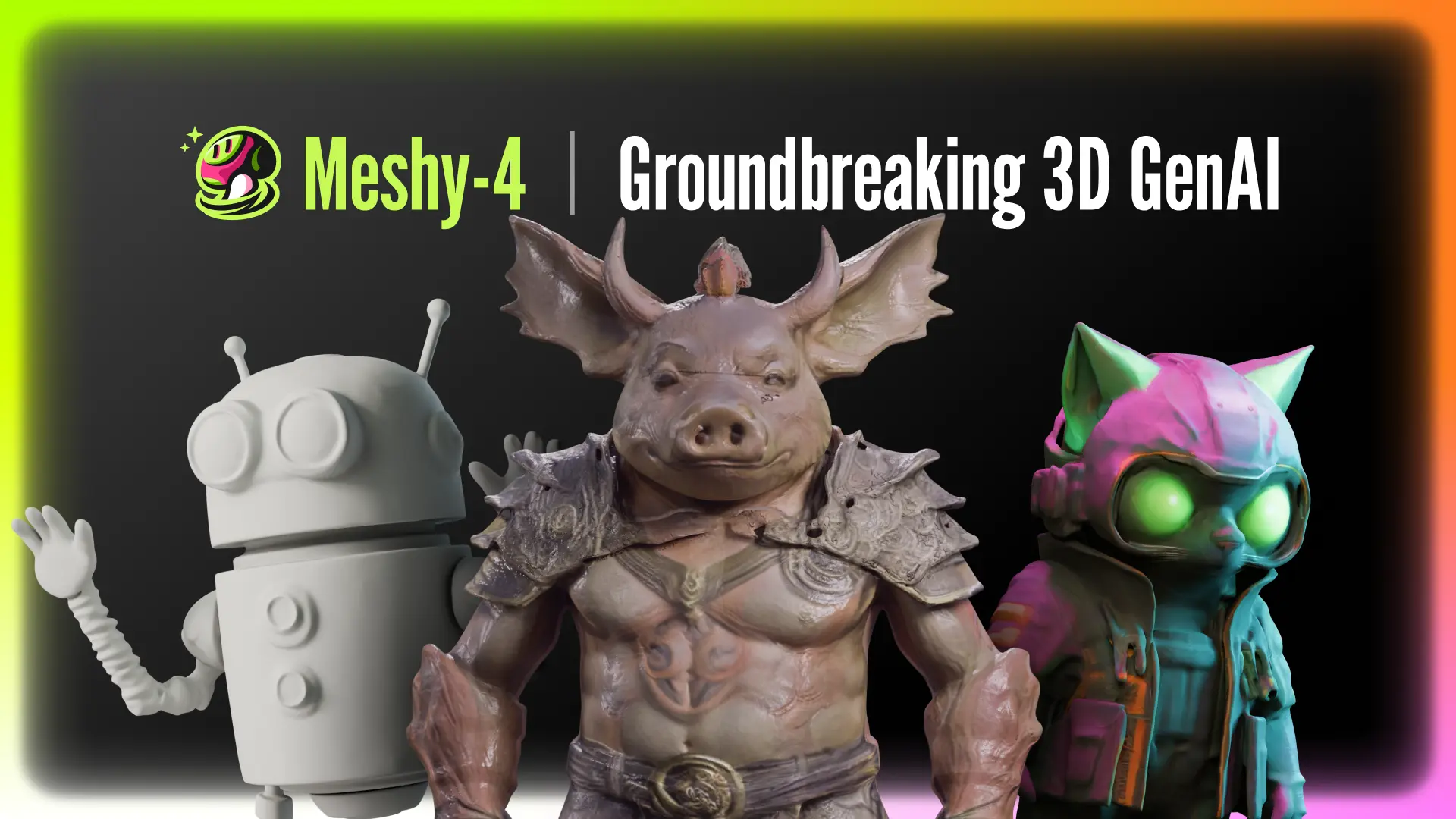 Meshy AI's text-to-3D workflow demonstrates production-ready asset generation. Source: Meshy AI Blog
Looking Ahead: AI 3D in 2026 and Beyond
AI 3D tools are improving rapidly. NB-YIT reports that text-to-3D generation times have dropped from hours to under a minute, with quality approaching manual modeling for many use cases.
Expect continued improvements in:
- Geometry detail: Rodin's enterprise models already exceed previous AI generations by 10x polygon counts
- Real-time rendering: Gaussian splatting in Cinema 4D 2026 enables photorealistic AR without performance penalties
- Animation and rigging: Automatic character rigging and physics simulations reduce technical barriers
- Sustainability: Virtual prototyping becomes standard practice, mandated by environmental regulations
For designers, this means shifting from manual modeling to AI-assisted iteration, focusing creative energy on art direction and brand storytelling rather than technical execution.
The brands winning in 2026 prioritize experience over static visuals. AI-powered 3D tools make immersive experiences accessible, measurable, and scalable. Start experimenting with free tiers, test against your brand needs, and prioritize tools with AR/VR export capabilities.
The spatial web is here. AI 3D tools are your entry point.